Our Projects

Real hardware. Real orbits.

Orbital Space missions span CubeSat development, in-orbit coding programs, experimental payloads, art transmissions, and lunar missions — each integrating education, research, and hands-on engagement within real space systems.

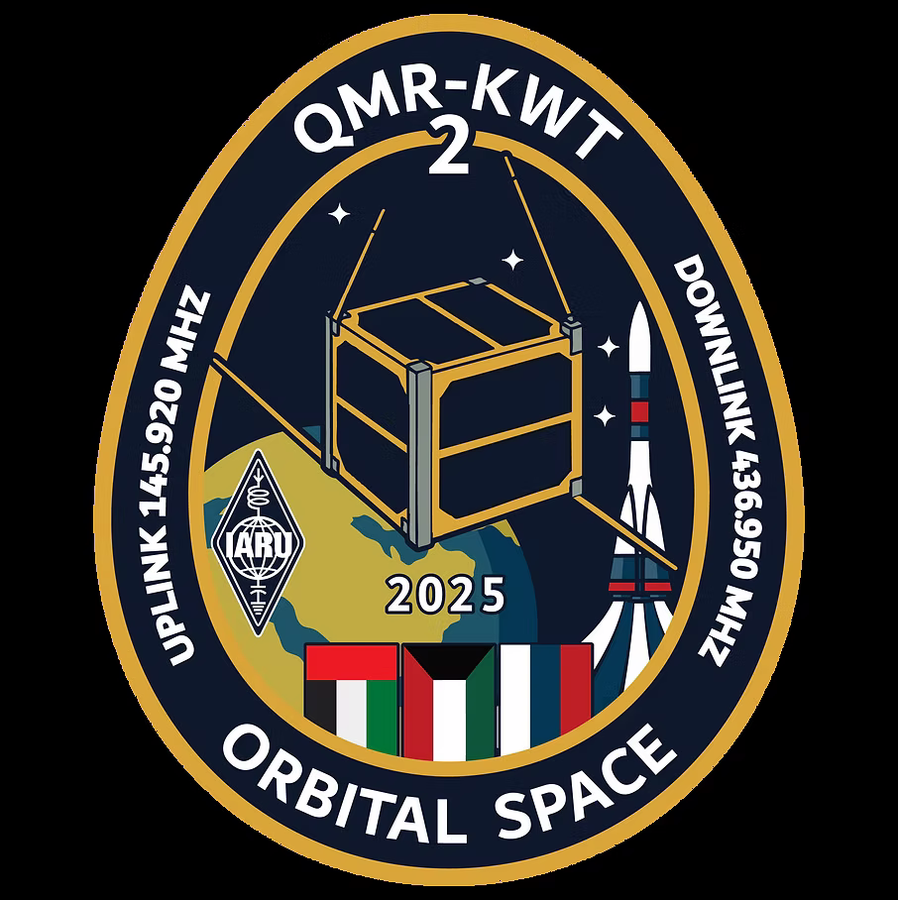
QMR-KWT-2 mission patch
Active in Orbit

QMR-KWT-2

A 1U CubeSat with Earth-imaging capability and an FM transponder (amateur radio VHF-to-UHF linear transponder). Successor to QMR-KWT — "Moon of Kuwait" — launched Dec 28, 2025 on a Soyuz-2.1b rocket from Vostochny Cosmodrome. Call sign RS95S: uplink 145.920 MHz, downlink 436.950 MHz.
Track Live → Submit Reception Report
Lunaris payload render
Targeting 2030

Lunar Surface Exploration — Lunaris Payload

The first private lunar mission from the Arab world, and the first student-led experiment on the Moon's surface. Orbital Space is partnering with lunar transport provider ispace to land the Lunaris Payload on the Moon in 2030. It investigates interactions between lunar regolith and different materials/coatings — a multidisciplinary student team is preparing the payload for extreme lunar temperatures and dust.

Ask about the Lunar Program
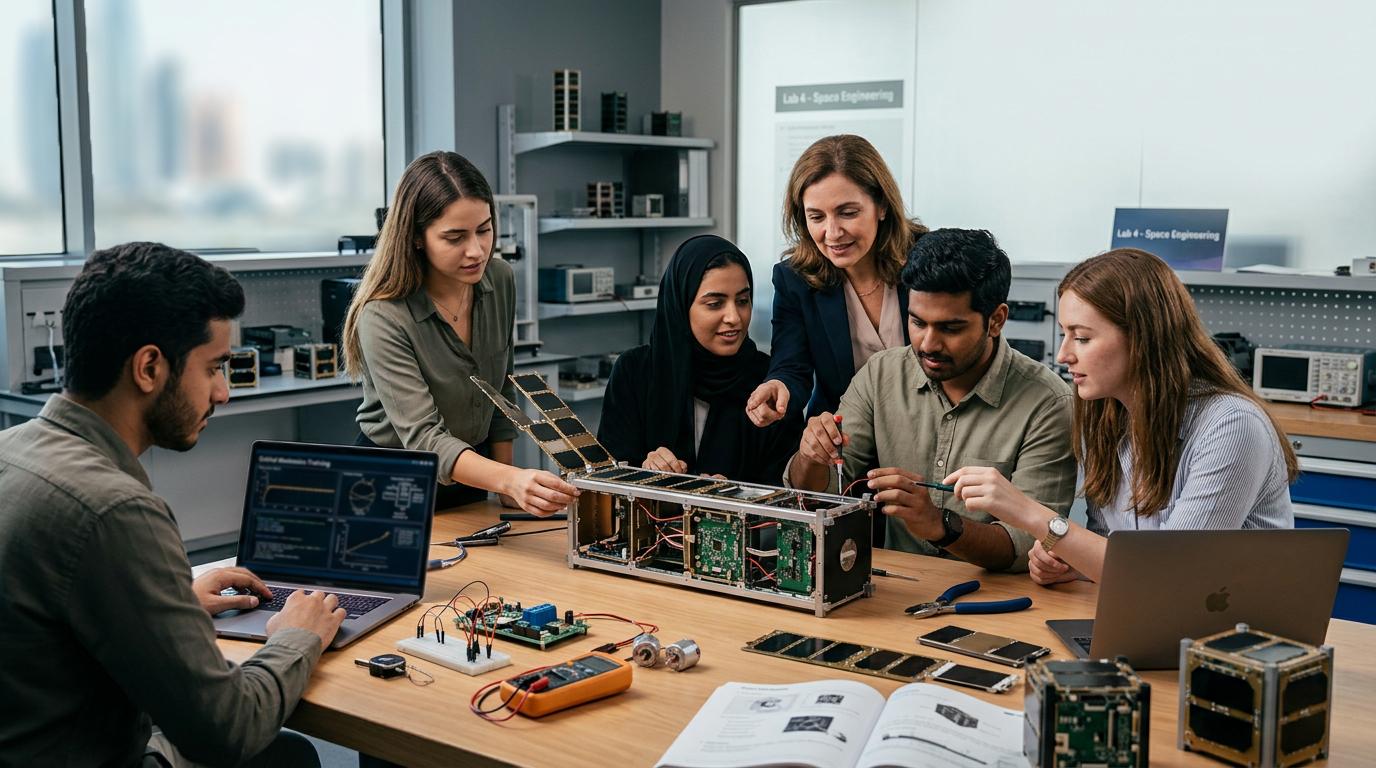
Code In Space — engineering lab
Completed · 2024

Code In Space

For the first time, students worldwide could send and execute their own code in Low Earth Orbit — proposals were uploaded to a nanosatellite, run by its onboard computer under real space conditions, and the results transmitted back via a ground station. The program concluded in 2024, and a successor mission building on what we learned is in development.

Ask About the Next Mission
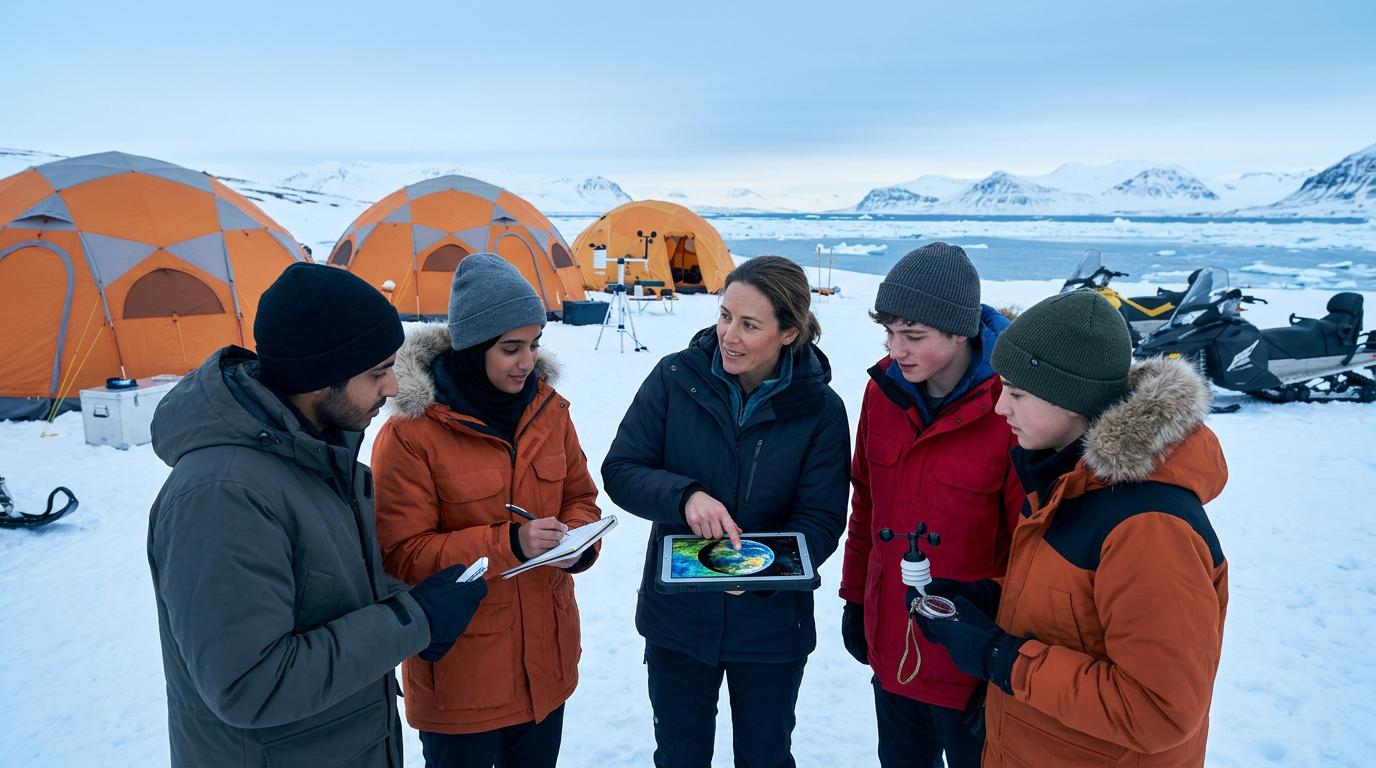
MAP² Explorers polar field expedition
Launching 2027

MAP² Explorers — UAE–Chile Analogue Science

A polar-desert analogue science program linking UAE desert environments with Chile's polar regions, exploring climate systems and planetary-analogue science relevant to future space missions. Designed for high-school and undergraduate students, in partnership with MARTEENS.

Partner With Us
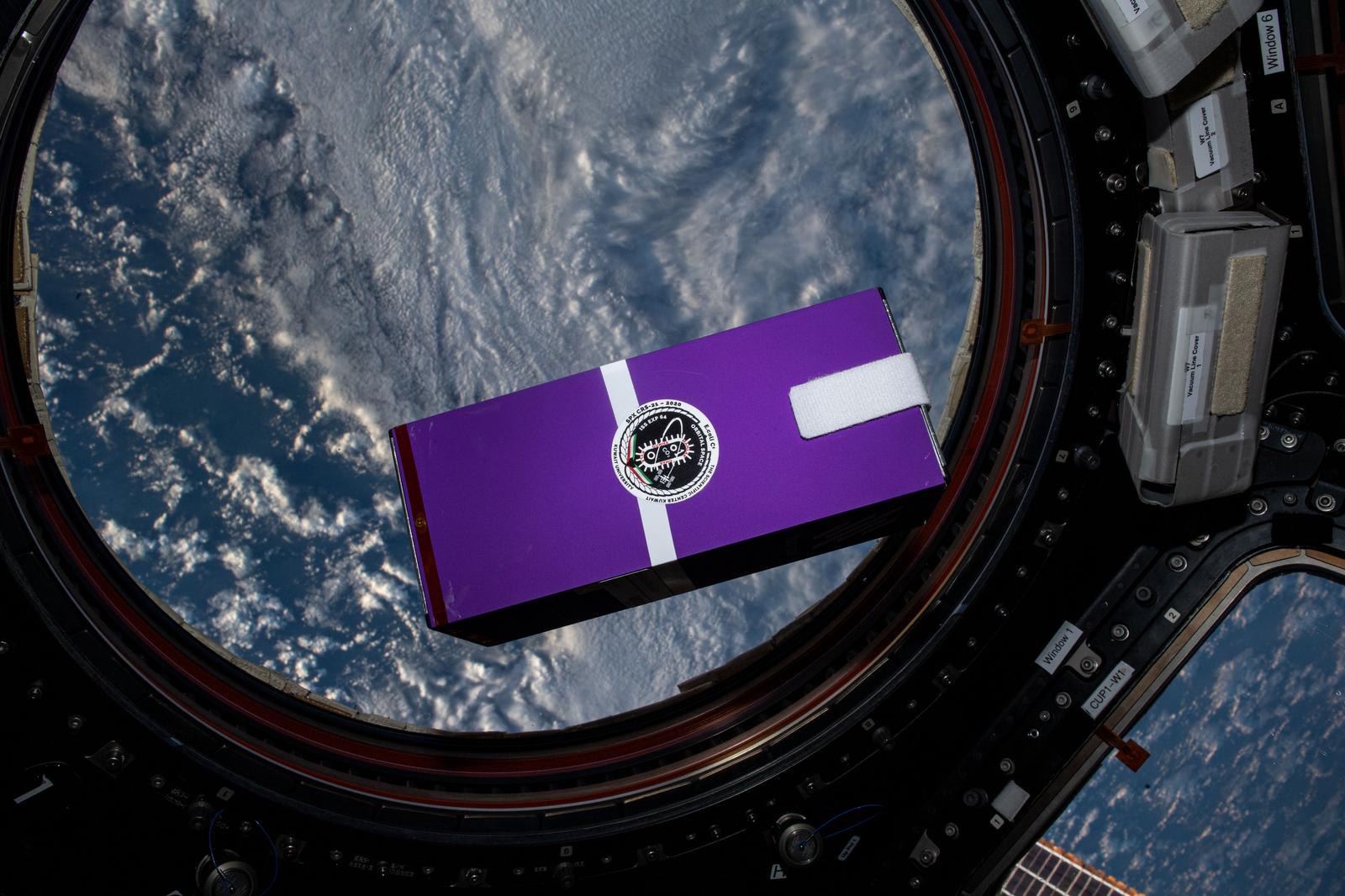
Experiment in Space payload aboard the ISS
Completed · 2020

Experiment in Space

In collaboration with leading research institutions, a platform for conducting microgravity experiments in biology and physical sciences. Our first: E. coli Consuming CO₂ to Combat Climate Change — Kuwait's first space mission, completed aboard the ISS.

View the experiment on NASA.gov →
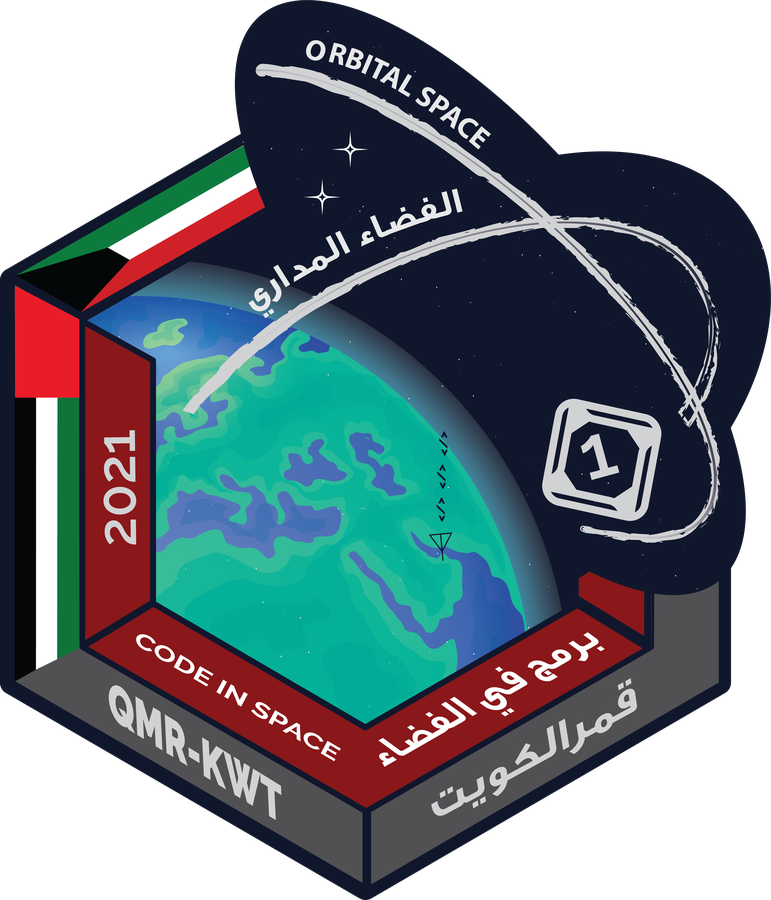
Code In Space — QMR-KWT mission patch
Decommissioned · 2021–2024

QMR-KWT

"Moon of Kuwait" — Kuwait's first satellite, launched aboard a SpaceX Falcon 9 rocket in 2021. Conceived to empower students in satellite communications, it re-entered Earth's atmosphere in Fall 2024 after more than three years in orbit. Int'l designator 2021-059BS.

In the Field

Our missions, beyond the mission cards.

Vostochny Cosmodrome, launch site of QMR-KWT-2

At Vostochny Cosmodrome, launch site of QMR-KWT-2.

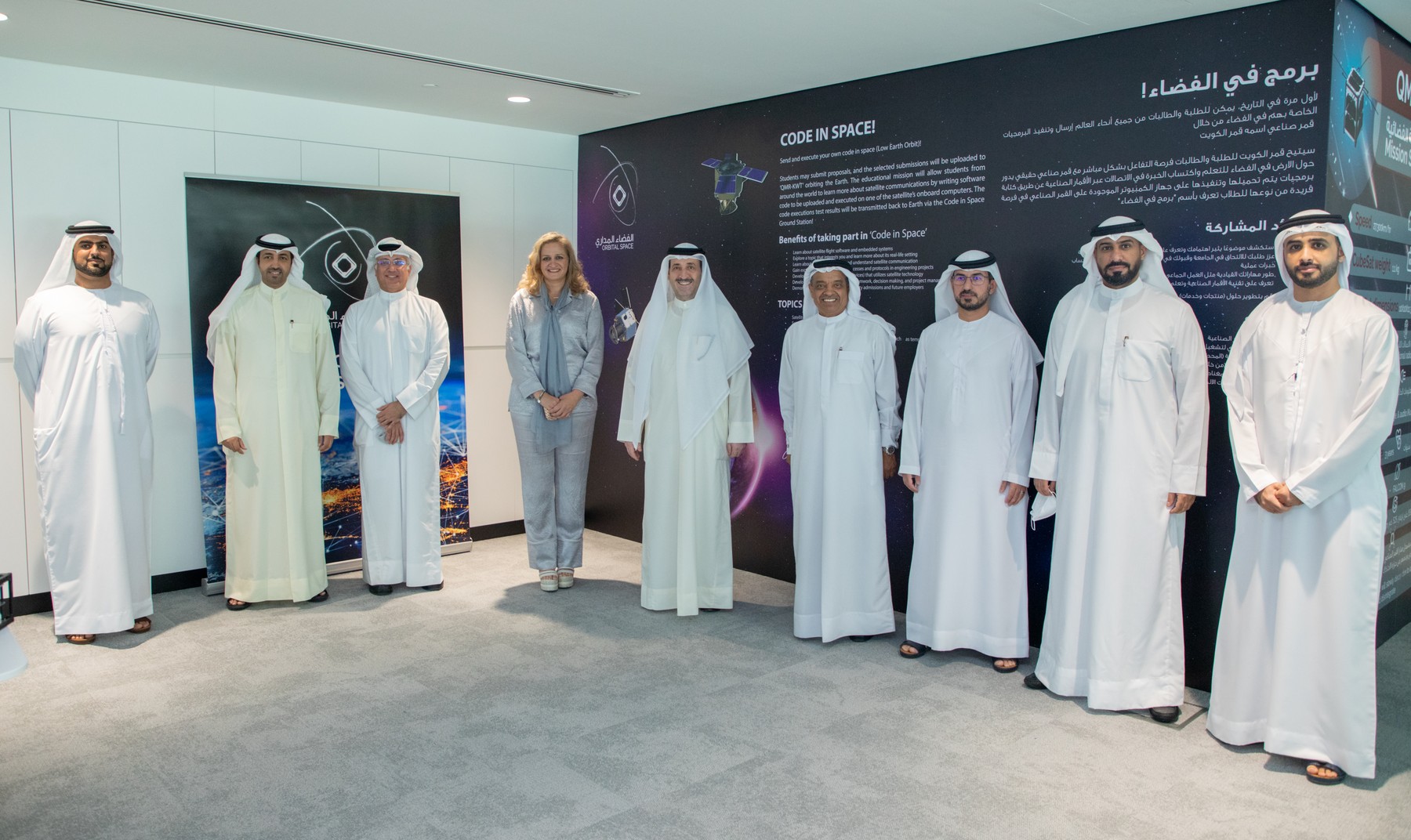
Code In Space program unveiling

Unveiling the Code In Space program.

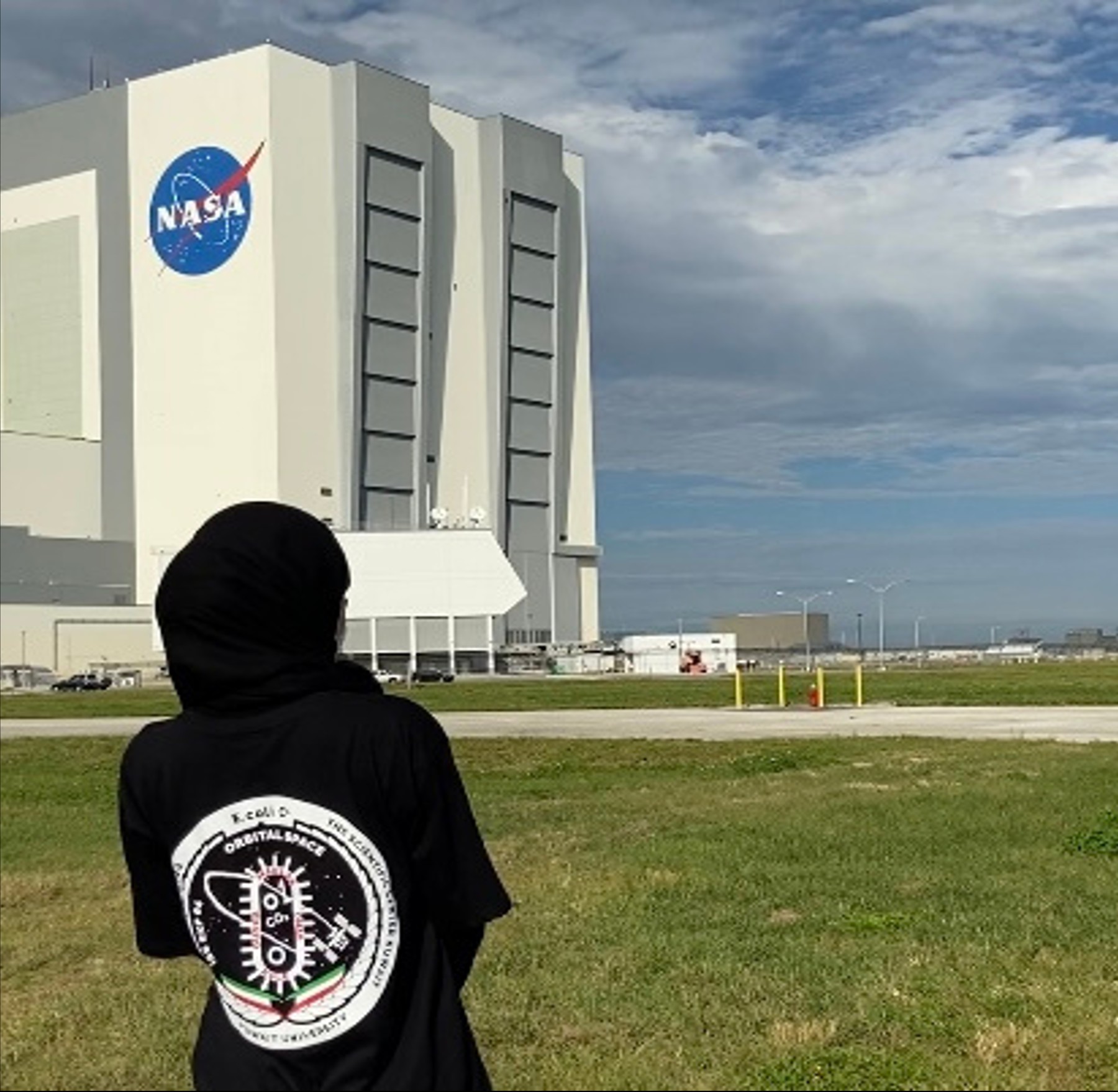
Experiment in Space mission patch at the NASA Vehicle Assembly Building

Experiment in Space, at NASA's Vehicle Assembly Building.

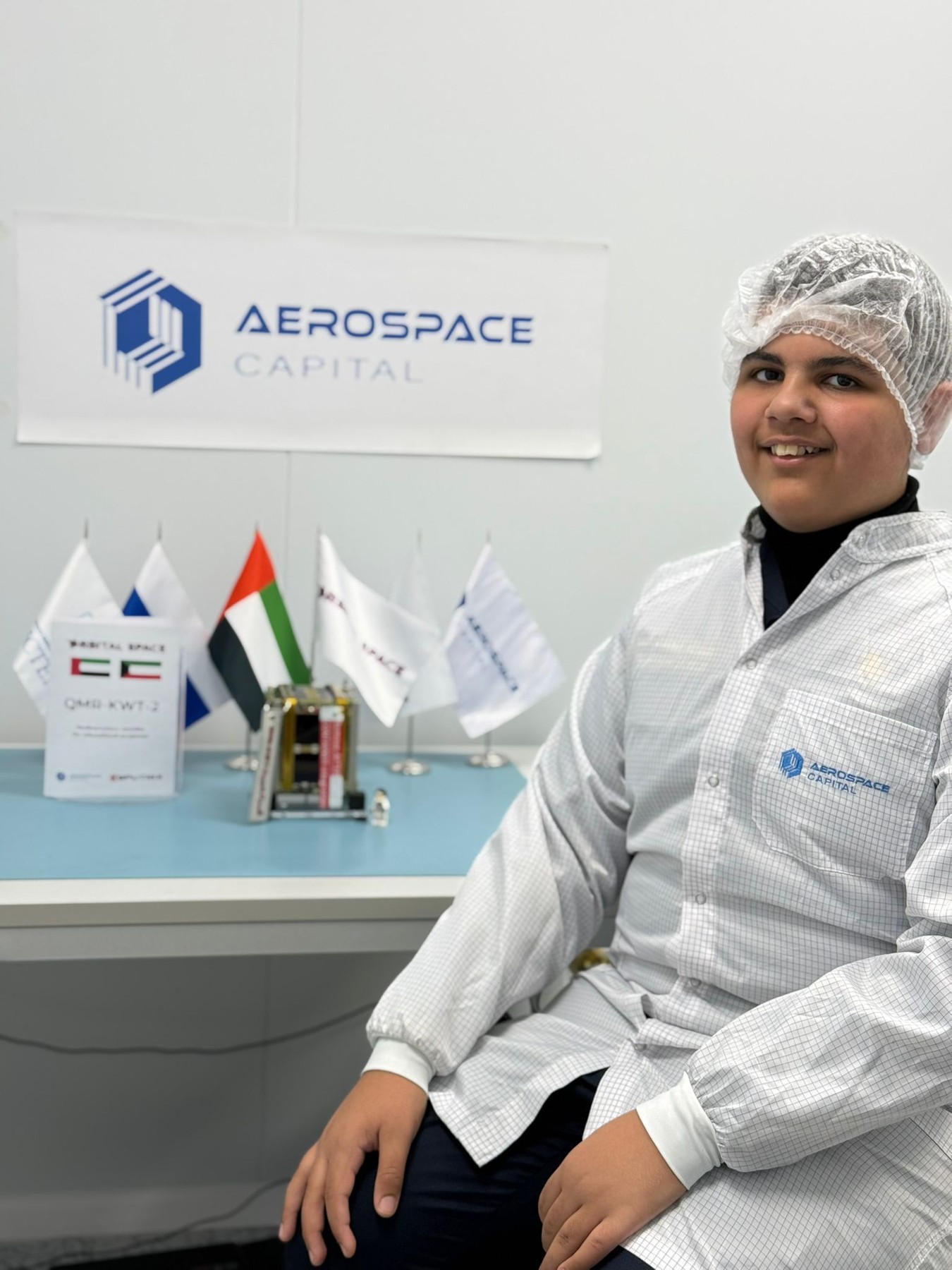
Student visitor with QMR-KWT-2 flight hardware in the cleanroom

A student visitor with QMR-KWT-2 flight hardware.

QMR-KWT-2 · FAQ

Common questions

Is QMR-KWT-2 active?

Yes — the mission is active and reception is welcomed.

Can anyone receive it?

Yes, anyone with suitable equipment and tracking tools can attempt reception.

Can schools participate?

Yes — educational mission activities, toolkits, and student programs are already active, including Space Bootcamp and Training Workshops, with a successor to our Code In Space program in development. See our education programs →

How fast is QMR-KWT-2 actually moving?

Around 27,400 km/h — roughly 7.6 km every second. At that speed it circles the entire planet in about 94 minutes, so it can pass over the same spot on Earth several times a day. Watch it live →

Can I talk to someone on the other side of the world through it?

Yes — that's the whole idea behind an FM repeater satellite. Two amateur radio operators too far apart to reach each other directly can both key up to QMR-KWT-2 as it passes overhead and relay a conversation through orbit, for as long as it's in view of both of you (usually 5-10 minutes).

Do I need expensive equipment to hear it?

No — a basic handheld VHF/UHF radio or a cheap SDR dongle and antenna is enough to start listening. Our Ground Station Starter Kit → is built for exactly this.

What happens when its orbit eventually decays?

Like every satellite in low Earth orbit, QMR-KWT-2 will slowly lose altitude to atmospheric drag and eventually re-enter and burn up — the same fate as its predecessor QMR-KWT, which flew for over three years before re-entering in Fall 2024.

Bring your research, payload, or class into orbit.

Request Services →